Apr–Oct usually brings together more balanced temperatures and conditions to cover the stages of this trip in comfort.
PERU · ADVENTURE + NATURE
ANDES — PERU, BOLIVIA & CHILE
Twenty days from Machu Picchu to Atacama, crossing Titicaca and the Salar de Uyuni through the roof of South America.
DURATION20 days
BEST TIMEApr–Oct
EXPERIENCEAdventure + Nature
COUNTRYPeru
THE JOURNEY
Route map
Cusco → Sacred Valley → Machu Picchu → Titicaca → La Paz → Uyuni → Atacama
The map loads when you reach this section.
FEATURED
Key highlights
1Machu Picchu at dawn
2Experiences in Sacred Valley
3Lake Titicaca and Isla del Sol
4Lookouts and photography
5Lagoons of the altiplano
6Atacama Desert
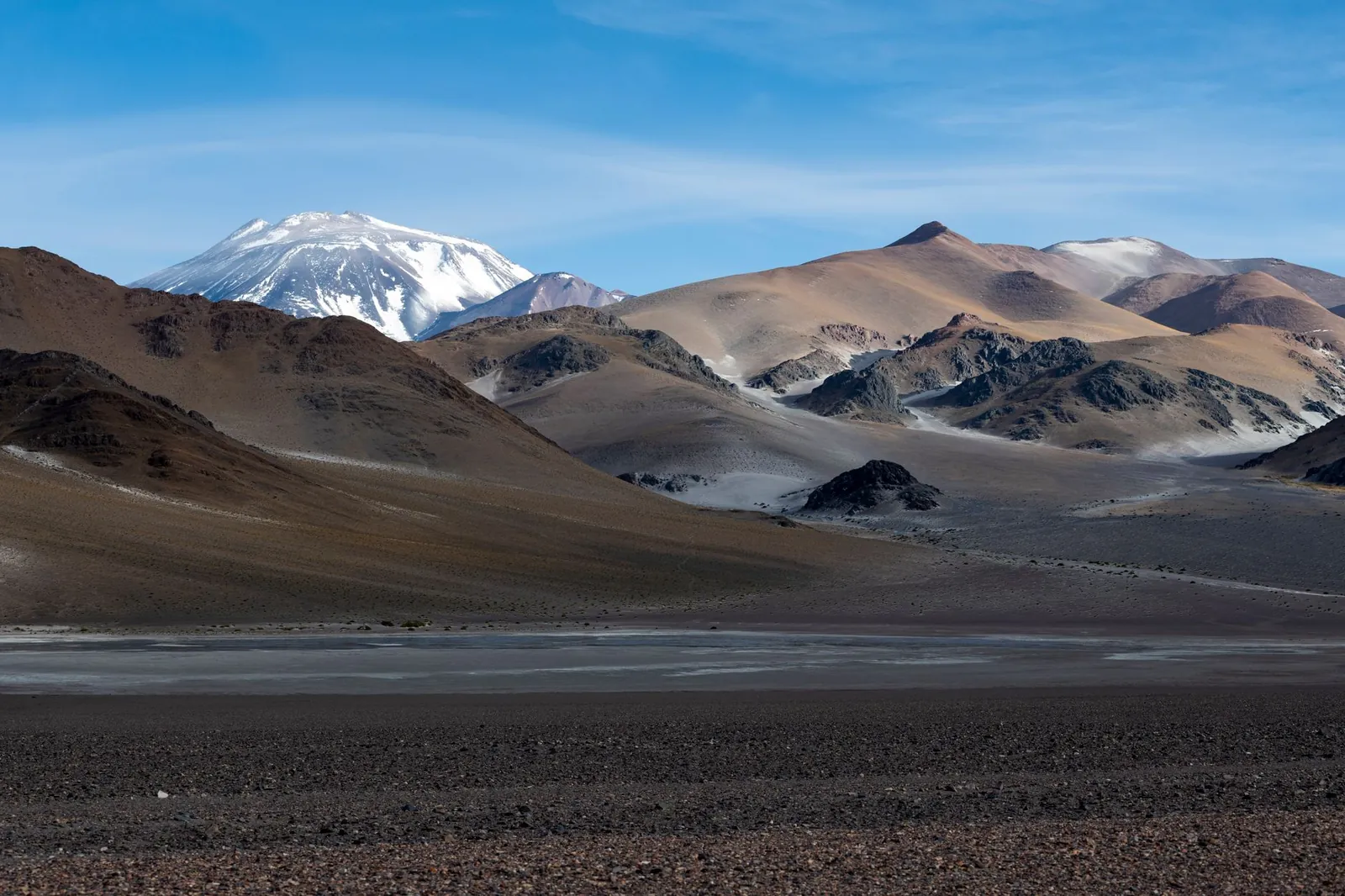
Few trips bring so much together in one route: the largest Inca city, the highest navigable lake in the world, the largest salt flat on the planet and the driest desert on Earth. The land crossing between Uyuni and Atacama, with flamingos, geysers and volcanoes on the way, is one of the most beautiful in South America.
SEASONALITY
When to go
A STARTING POINT
Suggested base itinerary
DAY 1
Arrival in Cusco and descent into the Valley
From the airport, straight to the Sacred Valley, 600 meters lower than Cusco: the right way for the body to get used to the altitude. Free afternoon, coca tea and dinner by the Urubamba River.
DAY 2
Pisac — terraces and market
Morning at the ruins of Pisac, with Inca terraces climbing the mountain. Then, the handicraft market in the village, among alpaca fabrics and Andean ceramics.
DAY 3
Moray and Salineras de Maras
The concentric rings of Moray, the agricultural laboratory of the Incas, and the thousands of salt pools of Maras, which have been exploited for more than 500 years.
DAY 4
Ollantaytambo → Aguas Calientes
Ollantaytambo Fortress in the morning. In the afternoon, the panoramic train through the Urubamba canyon to the foot of Machu Picchu.
DAY 5
Machu Picchu at dawn
First bus in the morning to see the citadel before the crowds, with a guide, and optionally the climb to Huayna Picchu. Train back and night in Cusco.
DAY 6
Cusco — the Inca capital
Plaza de Armas, Qorikancha, the temple of the Sun under the church of Santo Domingo, and the slopes of the San Blas neighborhood, with its ateliers.
DAY 7
Sacsayhuamán or Colorful Mountain
The megalithic walls of Sacsayhuamán above the city. For those who are already acclimatized, the full-day option is the Rainbow Mountain (Vinicunca), at 5,000 meters.
DAY 8
Cusco → Puno
Road through the altiplano with stops in Andahuaylillas, the "Sistine Chapel of the Andes", and in Raqchi. Arrival in Puno, on the banks of the Titicaca.
DAY 9
Titicaca — Uros and Taquile
Boat to the floating reed islands of the Uros and lunch in Taquile, where men weave and tradition is centuries old.
DAY 10
Copacabana and Isla del Sol
Border crossing to Bolivia. From Copacabana, boat to Isla del Sol, the mythical cradle of the Incas. Night on the island, under a sky of stars.
DAY 11
Isla del Sol → La Paz
Morning walk around the island, crossing the Strait of Tiquina and arriving in La Paz, the highest capital in the world.
DAY 12
La Paz by cable car
The cable car system over the city, the Mercado de las Brujas and the view of El Alto, with the snowy Illimani in the background.
DAY 13
Tiwanaku
The ruins of the civilization that preceded the Incas: the Puerta del Sol and the stone monoliths. Return to La Paz for a dinner of contemporary Bolivian cuisine.
DAY 14
La Paz — landscapes and culture
Short flight to Uyuni. In the afternoon, the cemetery of steam trains and the sunset at the edge of the salt flat.
DAY 15
La Paz → Uyuni
Full day in the largest salt desert in the world: Isla Incahuasi with its giant cacti, perspective photos and, in the rainy season, the mirror that merges sky and ground.
DAY 16
Lagoons of the altiplano
Cañapa and Hedionda lagoons full of flamingos, the Stone Tree and the red Laguna Colorada, at 4,300 meters. Night in simple refuge, part of the experience.
DAY 17
Geysers → San Pedro de Atacama
Sol de Mañana geysers at dawn, bathing in the Polques hot springs, the Laguna Verde at the foot of the Licancabur volcano and the crossing to Chile.
DAY 18
Valle de la Luna
Free afternoon in San Pedro and, at the end of the day, the sunset in the Valle de la Luna, with the dunes and the salt changing color.
DAY 19
Tatio Geysers or Altiplanic Lagoons
Departure before dawn to the Tatio geysers, or the Miscanti and Miñiques lagoons. At night, astronomical observation in one of the clearest skies on the planet.
DAY 20
Atacama → Calama
Free morning and transfer to Calama airport. End of the crossing through the Andes.
THE EXPERIENCE
The spirit of the journey
The trip begins in the Sacred Valley, lower than Cusco, so that the body gets used to the altitude before Machu Picchu at dawn. Then it goes up to the altiplano: the islands of Titicaca, the vertigo of La Paz seen from the cable car, three days by jeep through the Salar de Uyuni and the colorful lagoons of southern Bolivia, until descending to the oasis of San Pedro de Atacama, in Chile.
YOUR WAY
I want to design my trip now!Customize your trip
This is a starting point. Order, duration and experiences can be tailored to your pace and interests.