Oct–Apr tends to have more balanced temperatures and conditions to cover the stages of this trip in comfort.
CHILE · HERITAGE + CULTURE
CHILE — EASTER ISLAND
Six days in Rapa Nui: the sunrise in front of the 15 moai of Tongariki, the quarry of Rano Raraku, the ceremonial village of Orongo on the rim of the crater and the beach of Anakena.
DURATION6 days
BEST TIMEOct–Apr
EXPERIENCEHeritage + Culture
COUNTRYChile
THE JOURNEY
Route map
Hanga Roa → Tongariki → Rano Raraku → Orongo → Anakena
The map loads when you reach this section.
FEATURED
Key highlights
1Sunrise at Ahu Tongariki
2Rano Raraku Quarry
3Rano Kau Crater
4Ceremonial village of Orongo
5Anakena Beach
6Sunset in Ahu Tahai
At dawn in Ahu Tongariki, the sun rises behind 15 moai lined up with their backs to the sea, and the silhouette of the statues gradually lights up. The Rano Raraku quarry has a single entrance per ticket.
SEASONALITY
When to go
A STARTING POINT
Suggested base itinerary
DAY 1
Arrival at Hanga Roa
Flight from Santiago, reception with a flower necklace and sunset in Ahu Tahai, with moai facing the sea.
DAY 2
Moai of the interior
Ahu Akivi, the seven moai that look out to sea, the hat quarry of Puna Pau and the cave of Ana Te Pahu.
DAY 3
Tongariki and Rano Raraku
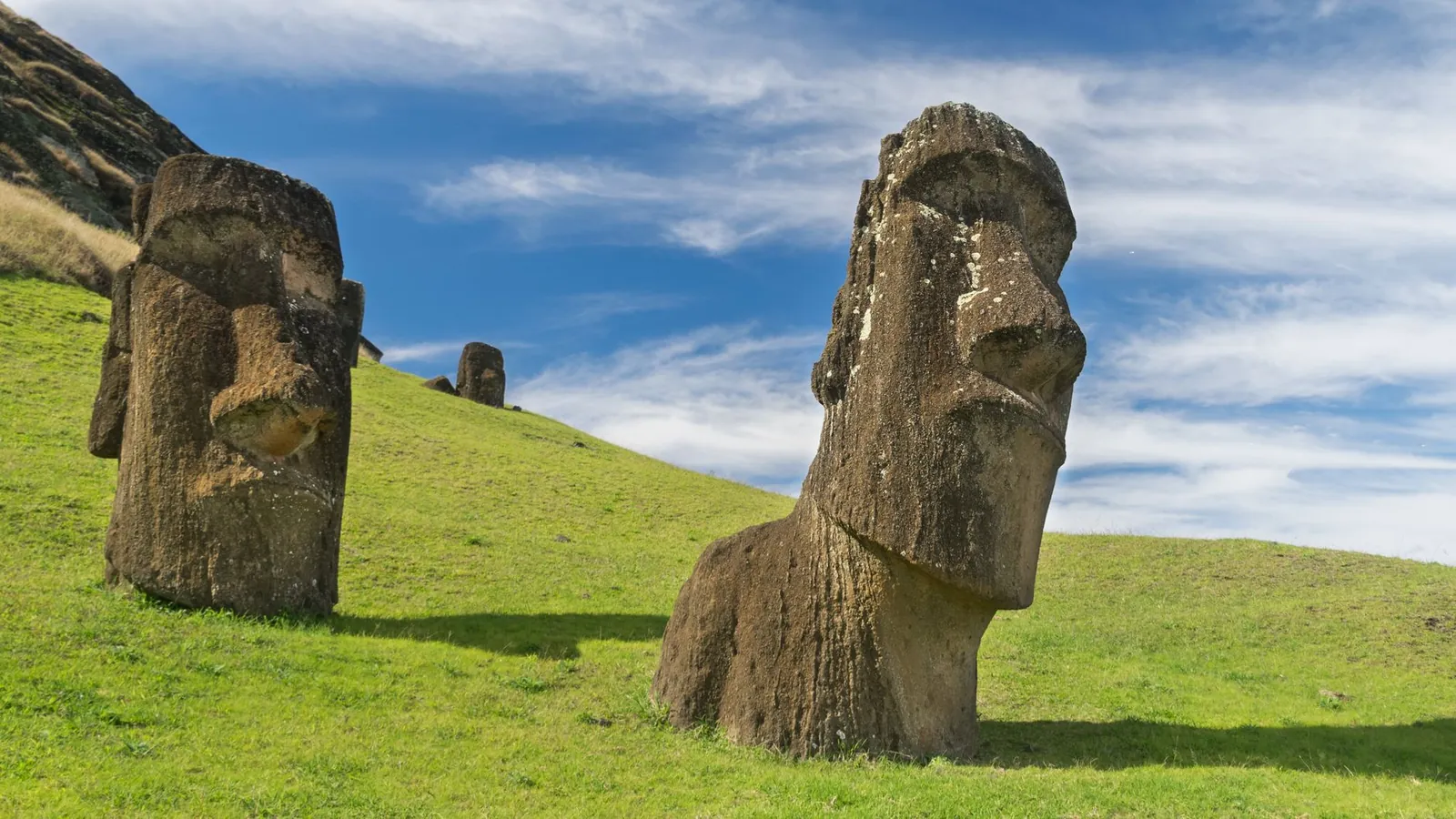
Sunrise at Ahu Tongariki and visit the Rano Raraku quarry, with moai half-buried on the hillside.
DAY 4
Rano Kau and Orongo
The crater of Rano Kau, with a pond of reeds, and the stone village of Orongo, stage of the Birdman competition.
DAY 5
Sea and culture
Snorkel or dive in highly visible waters and, at night, a Rapanui dance and music performance.
DAY 6
Anakena and departure
Morning at Anakena beach, with the moai of Ahu Nau Nau, and flight back to Santiago.
THE EXPERIENCE
The spirit of the journey
Hanga Roa is the only village on the island. The Rapa Nui National Park, a World Heritage Site, is managed by the community and requires admission and a guide at most sites. Rano Raraku is the quarry where the moai were born, Orongo holds the cult of the Birdman and Anakena has white sand and coconut trees.
YOUR WAY
I want to design my trip now!Customize your trip
This is a starting point. Order, duration and experiences can be tailored to your pace and interests.