May–Nov tends to favor movement and observation of fauna on this route, although sightings always depend on the behavior of the animals and local conditions.
MADAGASCAR · WILDLIFE + NATURE
MADAGASCAR — CLASSICS
Sixteen days in Madagascar, from the Avenue of the Baobabs to the indris of Andasibe, ending at the beaches of Sainte Marie.
DURATION16 days
BEST TIMEMay–Nov
EXPERIENCEWildlife + Nature
COUNTRYMadagascar
THE JOURNEY
Route map
Antananarivo → Morondava → Avenue of the Baobabs → Kirindy → Andasibe → Sainte Marie Island
The map loads when you reach this section.
FEATURED
Key highlights
1Baobab Avenue at sunset
2Indris de Andasibe
3Fossa and sifakas in Kirindy
4Night walks behind chameleons
5Whales in Sainte Marie (Jul–Sept)
6Island aux Nattes
About 90 percent of Madagascar's fauna only exists there: more than a hundred species of lemurs, half of the world's chameleons, and six of the eight species of baobab. It's a journey of slow roads and simple infrastructure, offset by encounters that don't happen anywhere else.
SEASONALITY
When to go
A STARTING POINT
Suggested base itinerary
DAY 1
Arrival in Antananarivo
Reception at the airport and night in a hotel in the capital, built on hills and rice paddies.
DAY 2
Antananarivo and Ambohimanga
The royal hill of Ambohimanga, a World Heritage Site and sacred place of the Malagasy, and the Queen's Palace at the top of the city, overlooking the red roofs.
DAY 3
Flights to Morondava
Flight to the west coast. In the late afternoon, Avenida dos Baobás, with trees up to 800 years old cut against the sunset.
DAY 4
Morondava → Kirindy
Dirt road to the dry forest of Kirindy, passing by the Baobab of the Lovers. At night, walk behind the mouse lemur, the smallest primate in the world.
DAY 5
Kirindy — cesspool and sifakas
Trails at dawn behind the fossa, a distant relative of cats and Madagascar's biggest predator, and Verreaux's sifakas leaping between the trees.
DAY 6
Kirindy → Morondava
Return to Morondava with Avenida dos Baobás at dawn, this time with the light on the other side. Free afternoon on the beach.
DAY 7
Piroga through the mangroves
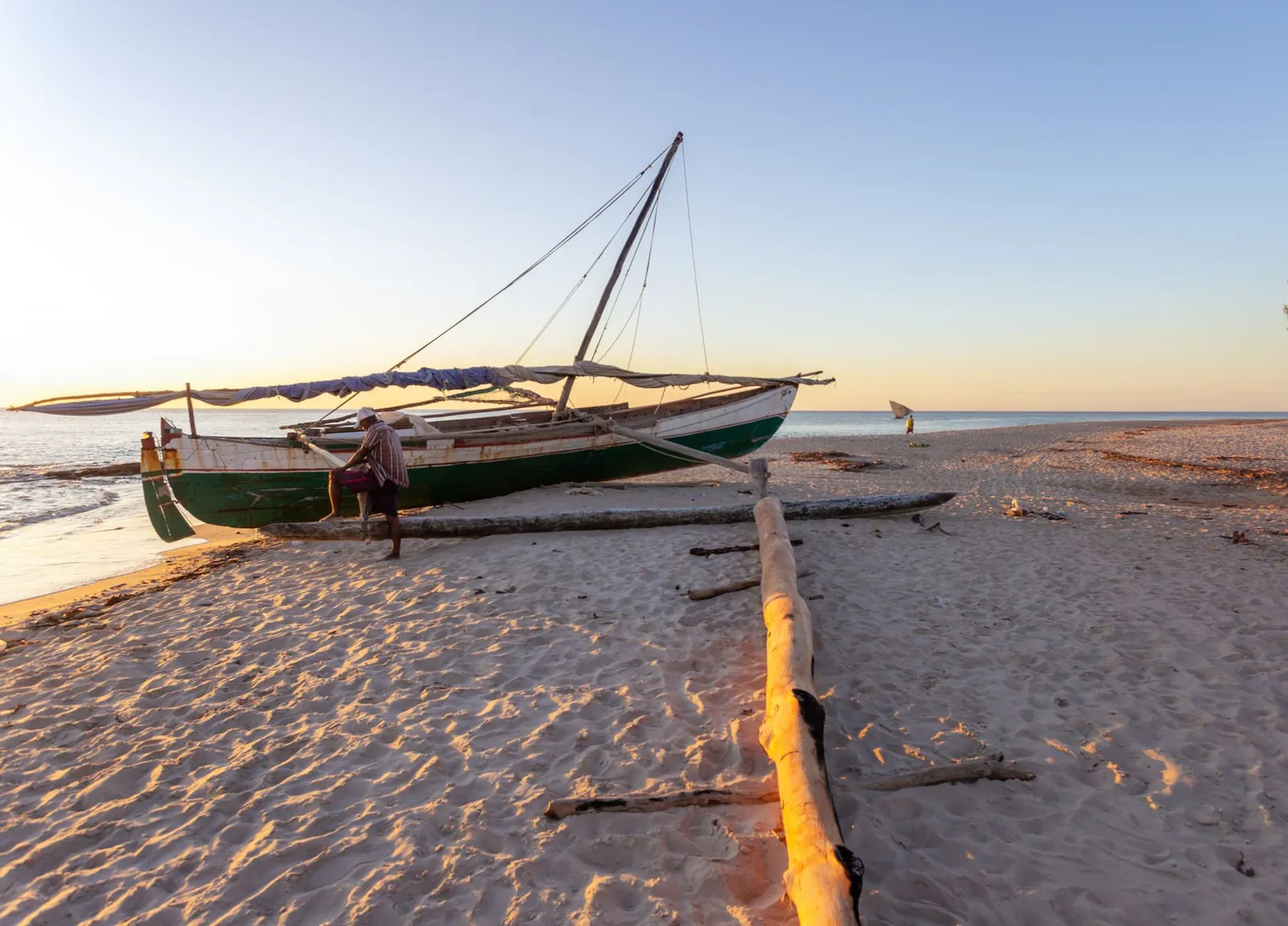
Pirogue ride through the mangroves and visit a village of Vezo fishermen, who have lived off the sea for generations.
DAY 8
Morondava → Antananarivo
Flight back to the capital and afternoon at the handicraft market, with embroidery, carved wood and antemoro paper.
DAY 9
Antananarivo → Andasibe
Road through the plateau between rice paddies and villages of mud houses, with a stop at a reserve of chameleons and reptiles. Arrival at the humid forest of the east.
DAY 10
Indris at dawn
Hike in the Analamazaotra reserve to meet the indris, the largest living lemurs, whose song echoes through the forest in the early morning.
DAY 11
Mantadia and night hike
The Mantadia National Park, with the sifaka-diademado and waterfalls in the forest. At night, walk after chameleons, colorful frogs and night lemurs.
DAY 12
Andasibe → Antananarivo
Return to the capital by the plateau road and night near the airport.
DAY 13
Flights to Sainte Marie
Short flight to Sainte Marie Island, long and covered with coconut trees. Beach afternoon and first seafood dinner.
DAY 14
Whales and the pirate graveyard
Between July and September, boat to see the humpback whales that come to breed in the channel. Out of season, snorkel in the reefs. In the afternoon, the old pirate cemetery.
DAY 15
Island aux Nattes
Crossing by pirogue to the small Isle aux Nattes, without cars, with white sand beaches and shallow, transparent water.
DAY 16
Sainte Marie Island in depth
Flight to Antananarivo and connection to the outbound flight.
THE EXPERIENCE
The spirit of the journey
After Antananarivo, the flight takes you to the west: the Avenue of the Baobabs at sunset and the Kirindy forest, where the trench, the largest predator on the island, lives. The second part swaps the dry for the green in Andasibe, with the singing of the indris at dawn and night walks in search of chameleons. The end is on Sainte Marie Island, with coconut beaches and, between July and September, humpback whales very close to the coast.
YOUR WAY
I want to design my trip now!Customize your trip
This is a starting point. Order, duration and experiences can be tailored to your pace and interests.