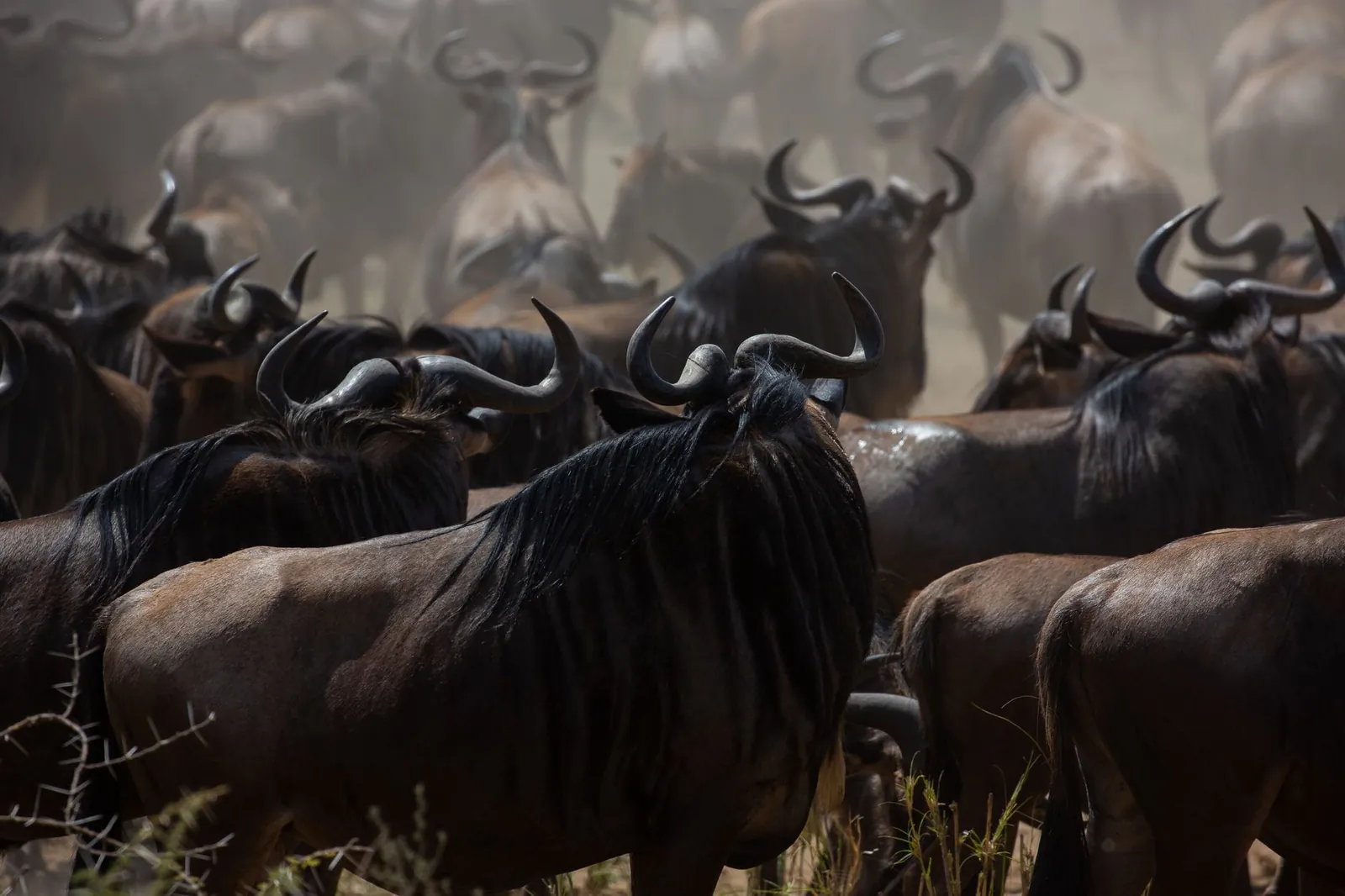
July to October coincides with the time most associated with the Great Migration in the Masai Mara; January and February tend to have drier weather in several regions of the country.
KENYA · WILDLIFE + NATURE
KENYA — MASAI MARA SAFARI
Nine days between the savannah of the Masai Mara, the flamingos of Lake Nakuru and the dry landscapes of Samburu, crossing the Equator.
DURATION9 days
BEST TIMEJul–Oct / Jan–Feb
EXPERIENCEWildlife + Nature
COUNTRYKenya
THE JOURNEY
Route map
Nairobi → Masai Mara → Lake Nakuru → Samburu
The map loads when you reach this section.
FEATURED
Key highlights
1Big Five at the Masai Mara
2Flamingos and rhinos of Lake Nakuru
3The five special stages of Samburu
4Rift Valley
5Crossing the Equator
6Masai community
It is the ideal combination for a first safari: the Masai Mara delivers the Big Five, Nakuru the rhinos and the birds, and Samburu a landscape and fauna unlike anything seen before.
SEASONALITY
When to go
A STARTING POINT
Suggested base itinerary
DAY 1
Arrival in Nairobi
Reception at the airport and night in Nairobi, with welcome dinner and conversation with the guide who accompanies the entire trip.
DAY 2
Nairobi → Masai Mara
Road through the Rift Valley, with a stop at a viewpoint over the valley, to the Masai Mara. First safari in the late afternoon.
DAY 3
Masai Mara: safari
Full day savannah safari, looking for lions, leopards, elephants and buffalo, with lunch in the countryside.
DAY 4
Balloon and Masai community
Option to balloon at dawn over the savannah. In the afternoon, visit to a Masai community and safari until sunset.
DAY 5
Masai Mara → Lake Nakuru
Road to Lake Nakuru and afternoon safari along the shore, among buffaloes, monkeys and the first pink clouds of flamingos.
DAY 6
Lake Nakuru
Safari behind the black and white rhinos that live in the park, and the Baboon Cliff lookout, overlooking the lake.
DAY 7
Nakuru → Samburu
Road to the north with a stop at the equator. The landscape becomes dry and red to the Samburu Reserve, on the banks of the Ewaso Ng'iro River.
DAY 8
The five special stages of Samburu
Safari behind the northern 'five specials': Grévy's zebra, reticulated giraffe, Beisa oryx, Somali ostrich and gerenuk, the antelope that eats standing up.
DAY 9
Closing
Last safari in the morning and back to Nairobi, by road or light flight, for the departure flight.
THE EXPERIENCE
The spirit of the journey
From Nairobi, the road descends the Rift Valley to the Masai Mara, for two days with the big cats. Then it climbs Lake Nakuru, with rhinos and flamingos, and crosses the equator to Samburu, where animals that only exist in Kenya's dry north, such as the Grévy's zebra and the reticulated giraffe, live.
YOUR WAY
I want to design my trip now!Customize your trip
This is a starting point. Order, duration and experiences can be tailored to your pace and interests.